

At Line 21, we’ve had plenty of reasons to consider video infrastructure and delivery of late. More clients are enjoying the transition to our video services as an all-in-one solution for their live events, and their feedback shapes our platform experience for the future.
Live captioning is our speciality, and video is part of the picture
Line 21 focuses on closed captioning, helping organisations make spoken content accessible to their audiences. Unlike other providers, we also provide our own HLS video player, which has given us a reason to look beyond captioning and pay attention to the wider video industry.
Building a player means thinking about the whole viewing experience. How does the audience access the content? How are captions displayed and synchronised? What happens when viewers speak different languages? What controls do event organisers need when delivering a live stream?
We can provide excellent captions, but the way those captions reach an audience matters too. The player, the video delivery and the available language options all contribute to the experience.
Providing our own player has allowed us to explore those connections directly and build accessibility into the viewing experience itself.
A different way to deliver accessible video
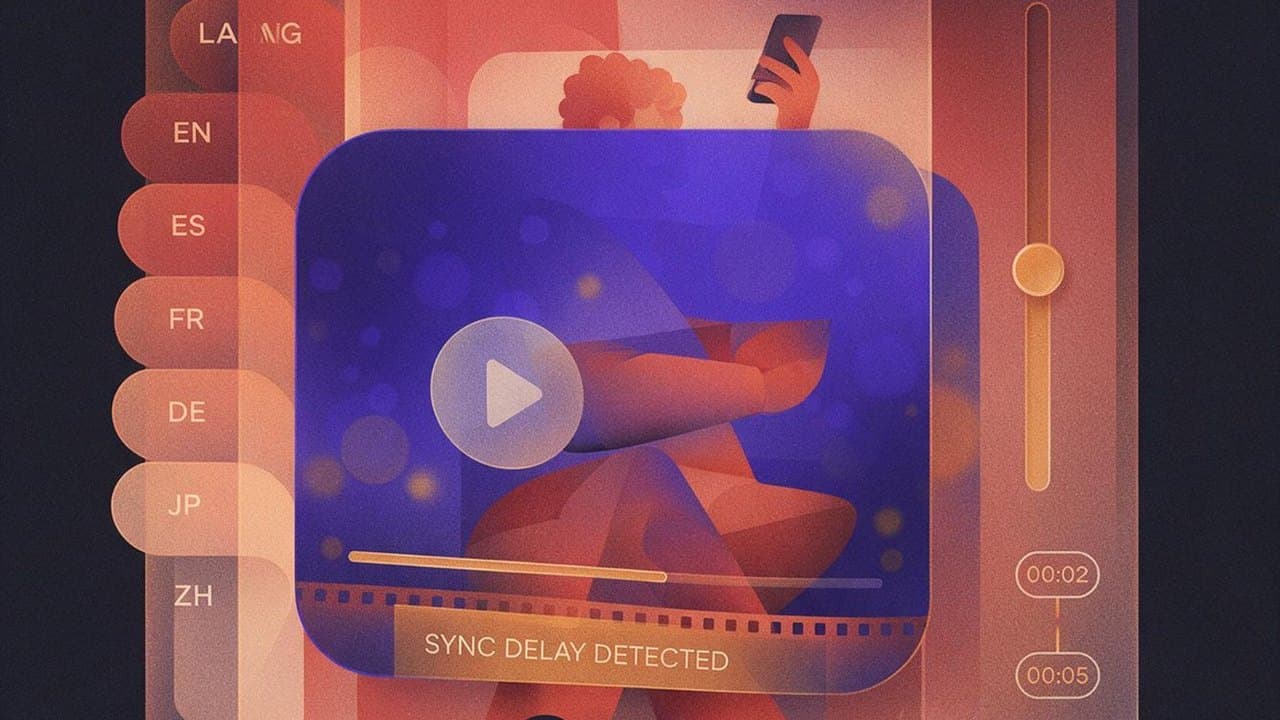
Our HLS player supports multiple language outputs and optional chat. We've recently added automatic delay detection, along with a slider that lets users introduce their own delay directly in the platform.
Anyone who has delivered live captions knows that timing can be a challenge. If captions arrive too early or too late, viewers have to work harder to follow what's happening. Automatic detection helps identify the delay, and the slider gives users a way to adjust it.
We're continuing to develop the player around the practical requirements of delivering accessible video.
For organisations looking to create a familiar, Vimeo-like viewing experience, this offers another option. You can provide video with captions in multiple languages, add chat if it suits your audience, and create a viewing experience without requiring viewers to pay for a subscription to the platform.
There will always be differences between video services, and some organisations will need the broader hosting, analytics and production tools that a larger platform provides. Others may primarily need a reliable player and accessible language outputs.
Understanding that distinction can help organisations choose the right setup for their requirements and budget.
Looking at the wider industry
Stories about subscription changes are a useful reminder that the tools we rely on can affect more than our monthly expenditure. They influence how we publish content, how audiences access it and how easily we can adapt when requirements change.
For organisations delivering accessible content, there are additional considerations. Captioning and translation need to work within the delivery setup, and the experience needs to make sense for the people watching.
Having our own player means we can consider those needs alongside the captioning service itself. It also gives us the opportunity to develop features in response to what clients are trying to achieve.
That's an area we'd like to keep exploring.
What would you like to see?
We're still taking feature requests for our HLS player.
If you're delivering live events, sharing training videos or looking for a way to provide accessible video in multiple languages, we'd like to hear about your requirements.
Perhaps there's a feature you rely on elsewhere, a problem with your current setup or a viewing experience you'd like to recreate without putting access behind another subscription.
We're interested in hearing what would make a practical difference to your work.
If you're exploring options for accessible video, get in touch with Line 21. We'd be happy to talk through what you're looking to achieve and where our player might fit.