

Should live captions be allowed to swear?
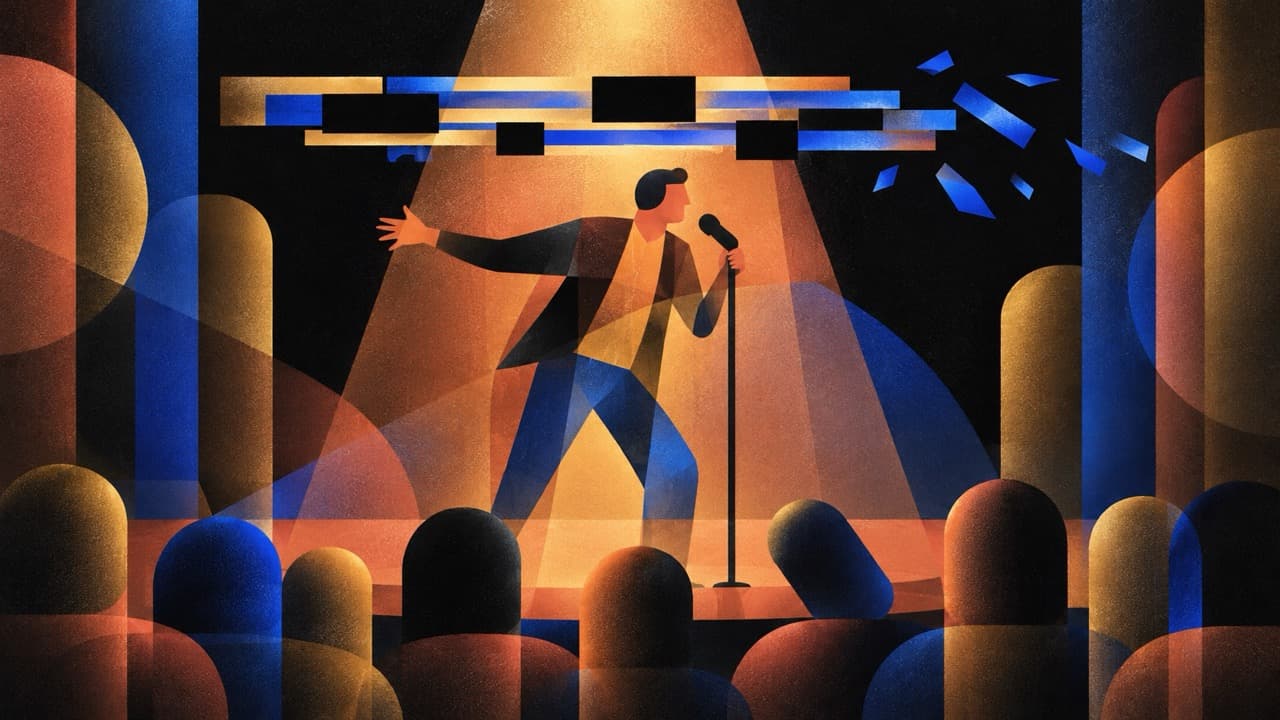
Somewhere in this vast and beautiful world, a comedian or five are delivering a beautifully constructed, deeply inappropriate punchline. Or they're riffing, having their best time sprinkling cunning stunts in among some darkly-crafted crikey ducks.
What do you do when you are hostage to a speech to text engine that will not allow you to profane the air with the ripe potential for delight, shock, or of course a strongly-worded letter of complaint?
Before you pull up a chair and assure me in the wise tones of a man who can that there's a toggle for that - actually my as-yet-unmet but assuredly perturbed friend, there may not be. That toggle might fall off of some user interfaces. The tickbox has not been transferred to the public.
So, if the setting isn't there - and let's walk past the why of that curious and interesting choice, made in a room by Others, the They of the world - what does it matter?
For live performances, that is quite a limitation to bring to the table. And for the purposes of this article, I am eschewing business meetings or other day to day use of speech to text, because the vagaries of a deeply heated discussion on whether or not this writer is possessed by whim are nothing if not punctuated with expletives learned at the knees of non-existent sailors.
So back to live performances, with live audience members. The real and living ones, who have parted with cold hard cash to enjoy a performance in its entirety. If a performer is either committed to their bit, or just simply no longer has a duck to give, how much of the show are you stealing if your captions develop a nervous blush and decide to mask profanity?
This is couching it kindly; it is a machine. It cannot have a nervous blush unless the degenerates on Grok are at it again, it's a censorship - and a theft of a night of fun. Are showrunners ready to give back 30-50% of the ticket price? Do we say the audience was in the venue anyway and they got to breathe the same air as the performer and some hearies, shame about the accessibility, out of our hands - technical issue with the engine?
It's just a word or an entire football chant, what do you mean?
What makes you desecrate the air with a turn of phrase that leaves your conversational partner blinking while they decide whether your spontaneous slam dunk was anger, affection, disbelief? Was it said lovingly, the way Roy Kent tries to improve the world with his ducks?
Profanity works. It surprises, lands a punchline and establishes characters. Imagine watching The Boys on mute, and your subtitles censor any profanity. If that wouldn't be an absolute carousel of early dementia in trying to keep up - and it is even with subtitles - I don't know what would be.
If you remove the heart of meaning to win an exchange of grammatical respectability, you have won a wind-up crocodile with dentures. Safe choices are not always the right ones.
We know that engines misbehave - and if you've worked with Line 21 and sat in a debrief call with me, you know that I know that you know how they misbehave. We will talk about how best to mitigate the misbehaving imp engines and placate the hungry god of context. But if your engine has to have profanity turned off permanently, because otherwise it will presumably pepper everyday speech with heavier salt than Shameless, is that not a development and quality control issue - not the end consumer's?
If your speech to text service is not fit for purpose for the live event space, you are ill-serving the community at large.
One miss can be easy enough to work around, but an evening of them is a very different experience. How tiresome, and how draining for the attendees who were told live captioning was available to them. Instead, they bought a ticket to Blankety Blank.
Functional live captioning?
We appreciate school, church, family friendly events and all the scenarios where language restriction is prudent. Accommodating those choices is part of a functional live captioning service, but not one at the expense of the other.
Failure to make users aware of this setting - or lack thereof, is an extraordinary choice.
Granted, when the question arose if Line 21 provides live captions - and if you have ever surfaced Live Chat conversations, it's always a bit of a roulette - "do you allow swearing?" they ask, they seem very particular.
My goodness, my pirate self squeaks, the puritanical have found us at last. We are ready to assure that any caption that escapes our ship, whether human stenographer or automated engine, will do whatever your audience wants it to. "No" they averr firmly, "we want it to swear". Well, that led us here. And to a demo inviting attendees to do their own version of Chitty Chitty Bang Bang with substitutions.
And it is important to talk about human captioners as well. Behind the deadpan stare of a non-judgmental captioner bound by an oath of confidentiality is a professional who probably has more shortforms for ducks, stunts and tricks than you knew possible.
Because live captioning should be real-time reactive and reflective of the truth. All limitations need to be clear before events go live, and long before event production teams are forced to mitigate a problem they have no control over.
Caption consumers should choose
An audience deserves a complete performance to form an opinion. Someone may not actually appreciate the absolute depths of filth someone plumbs, but at least they were included in the show, and had a memorable night for the right reasons.
Even the above, however, assumes that some poor lost soul wandered into a comedian's set unknowing that they purchased the ticket. I apologise for that, I appreciate that audience members (unless invited as a bait) probably quite specifically signed up for all the filtered content. You made your peace and brought a shovel for that plate.
You cannot offer the illusion of choice for accessibility. People deserve more consideration than a permanently checked box, regardless of whether the engine says no. It's an engine, stare at your CTO with the unflinching three rattling marbles of a llama until they advise it's a useful addition to the roadmap. And then talk to your providers.
Advocate for your audiences. If language is for communication, in a time where art is already censored, should we not be even fiercer in defence of the humble F-splash? Choose a live captioning provider who is slightly bemused by some bespoke requests but will support your right to curse, yowl and squawk like a chicken in any language if you so choose by default.
A brief, to be brief
Know where captions will appear, who the audience is, and what has been agreed with performers. Have software you can rely on for the right reasons. Then remember this is a live event, and seek divine intermediaries. Note, swearing and deliberate abuse need separate considerations.
I once managed to break a speech to text engine with director's names and receive every sixth word back as "Tarantino" in the space of 40 minutes. (Don't worry, we worked out why, and it was during internal testing.) But it certainly did not escape the park and make it into the live space, and its impact was never felt by audiences.
And yet it seems there are others in this industry who have done the equivalent, and released their engine du jour into the live space without thought for audiences. Choose your live captioning provider carefully; think about your scenarios as an event producer.
Do your AV teams swear?
We've worked with many AV teams in the live space. We've tested the Owl and the Pussycat for a four hour run, whilst a man on the microphone begged anyone nearby to take the microphone away from him. The [laughter] of his colleagues was captured perfectly.
Test the live content you plan to hear. From names, specialist terminology, and the swearing. Provider doesn't include a live testing allocation? Excuse my brutal execution: switch to one who does.
Provider receives feedback that it might be nice to be able to swear sometimes or always and says "I'm sorry but the toggle you want does not exist"? Run away. Of course it exists.
If a speech to text provider cannot commit to caring about the accessible service they deliver, move away from them.
If they cannot offer you humans as a gold standard, or a hybrid service, move away from them. Your audience will remember the wrong experience if not.
At Line 21, we welcome conversations about the practical details of live accessibility, including the ones that make the production meeting a little more entertaining. The partners who work with us, stay with us - and there's a reason for that.
Talk to us. We would love to help you think it through.
[This article was not written with AI, though I believe many may have wished it was, if only for brevity, M&S callbacks and more optimisation]